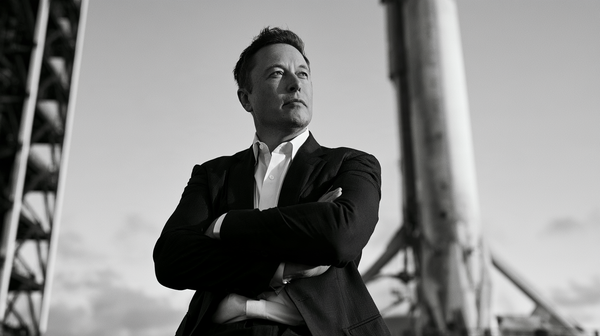
Warsh Said What the Archive Expected: "I Don't Have to Please Markets." Now 60% of the Market Believes Him.
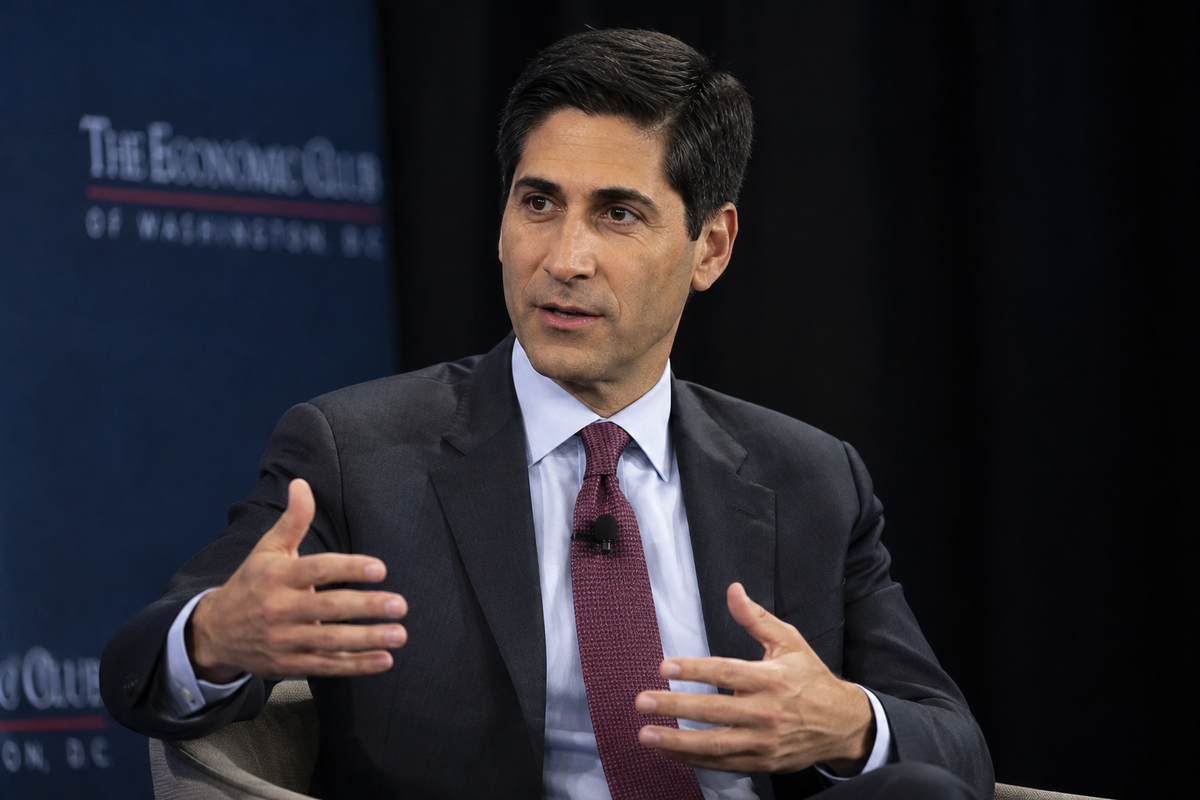
Monetary Policy Balance Sheet Audit
Warsh Said What the Archive Expected: "I Don't Have to Please Markets." Now 60% of the Options Market Believes Him.
Jackson Hole delivered a hawkish surprise. Deutsche Bank said he "surprised us with his specificity." Nomura said he "hinted rates could rise if inflation doesn't fall fast enough." CME FedWatch moved September hike probability from 33% to 60.4% overnight. The Archive was positioned before the speech. Here is what comes next.
The financial markets expected a measured, careful, deliberately balanced first keynote from a new Fed Chair establishing his credentials. They expected him to split the difference between the hawks and the doves, leave September ambiguous, and preserve maximum optionality. Kevin Warsh delivered none of that. He delivered one sentence that the Archive considers the most consequential thing said at Jackson Hole since Powell's eight-minute "pain" speech in 2022: "I don't have to please the markets."
Deutsche Bank's reaction: "He surprised us with his specificity and hawkish tilt." Nomura: "He hinted that rates could rise if inflation doesn't fall fast enough." The phrase that became the market's focal point was not a policy declaration but a data assessment: "A few better summer data points do not mean the trend has improved." Seven words. They erased 27 percentage points of September rate hike probability overnight, moving the CME FedWatch from 33% to 60.4%.
Gold fell. Asian equity markets opened lower Monday. Treasury yields moved higher across the curve. The reaction was textbook hawkish surprise repricing — and it was entirely predictable from the structural data the Archive had been reading for weeks. PCE at 3.7% against a 2% target, three internal dissents at the last FOMC meeting, a 30-year Treasury yield already at a 19-year high. Warsh had no credible dovish path. The market simply did not believe he would use the hawkish one.
This briefing delivers the forensic reading of what Warsh actually said, what it means for the September decision, and — more importantly — what it confirms about the structural environment for hard assets. The core message: a Fed Chair who publicly announces he will not bend to market pressure, in an environment of 3.7% inflation and $40 trillion in debt, has just confirmed that the interest rate will be used as a blunt instrument regardless of asset price consequences. That is the most structurally bullish confirmation for physical gold the Archive has received from a central banker since Paul Volcker in 1979.
Fiduciary Recommendation — Ad
|
I.What Warsh Actually Said — and What It Means for September
The Archive decodes central bank language for structural signal, not surface reading. Here is what Warsh delivered Thursday morning — and what each element actually communicates:
1."A few better summer data points do not mean the trend has improved." This is a direct rejection of the market's narrative that June and July CPI softness was the beginning of a sustainable disinflationary trend. Warsh is telling the market that one or two months of moderating data do not change the structural inflation assessment. With PCE still at 3.7% — 85 basis points above the Fed's target — this is the appropriate reading. The market had priced in a dovish path on seasonal data improvements. Warsh closed it.
2."I don't have to please the markets." This is the most consequential sentence Warsh delivered — and the one the financial press has underweighted. A Fed Chair publicly stating that market reactions are not his constraint is establishing a framework for independence from asset price feedback loops. Every Fed Chair since Greenspan has, to varying degrees, managed policy with one eye on market reaction. Warsh just announced he is doing something structurally different. That changes the risk calculus for every leveraged long position in the market.
3.The CBDC and financial innovation content. The symposium theme was financial innovation and digital payments. Warsh's remarks on this topic were deliberately vague — but the Archive notes that he did not endorse a retail CBDC and did not close the door on one. The 15 external experts reviewing the Fed's monetary policy framework have until end of 2026 to report. Whatever they recommend will be Warsh's first major structural policy decision. The absence of specificity on this topic is itself informative: he is reserving that decision.
4.What he did not say about fiscal policy. Warsh did not acknowledge the $40 trillion debt load. He did not use language suggesting fiscal-monetary coordination. He did not reference the 30-year Treasury at 5.31%. The Archive reads this absence as a deliberate signal: Warsh is not going to allow fiscal constraints to become part of his public monetary policy framework — at least not yet. A Fed Chair who refuses to acknowledge fiscal constraint is implying he has the independence to raise rates further than the bond market has assumed. That is what drove the 60.4% September hike probability.
5.The three dissenting regional presidents — not mentioned but implicitly addressed. By delivering a hawkish speech, Warsh has publicly aligned with the dissenting bloc within his own committee. He cannot acknowledge the dissents without undermining committee cohesion — but the speech content itself sent a message to the hawks that the Chair is moving in their direction. This is internal committee management through public signaling. The next FOMC meeting in September may produce a unanimous decision in favor of a hike — or a much narrower dissent count if the Chair moves to hold with hawkish language. Both outcomes are more hawkish than the pre-speech baseline.
6.The PCE arithmetic. The Fed's target is 2%. PCE is at 3.7%. The gap is 170 basis points. The fed funds rate is 3.50–3.75%. Effective real rate: approximately zero to marginally positive. A central bank running a near-zero real rate against 3.7% inflation has not materially tightened financial conditions in inflation-adjusted terms. Warsh's speech implies he understands this arithmetic. The question is whether he is willing to accept the growth consequences of correcting it.
| The Post-Warsh Policy Ledger | Archive Audit |
|
September hike probability pre-speech |
33% — market expected dovish hold |
|
September hike probability post-speech |
60.4% — CME FedWatch overnight shift |
|
PCE inflation vs Fed target gap |
3.7% vs 2.0% — 170bps above target |
|
Current effective real rate |
~0% to marginally positive — not restrictive |
|
Gold reaction to speech |
Fell on dollar strength — temporary, not structural |
| *The Useful Message: Gold's decline on Warsh's hawkish speech is the reaction every prior tightening cycle has produced — and it is always temporary when inflation remains structurally above target. The 1979–1980 Volcker tightening saw gold initially fall on rate hike announcements. By 1980, gold had reached $850/oz — its peak. The short-term dollar strength from a hawkish Fed does not resolve a 170-basis-point inflation-target gap. The real rate remains the key: if it stays near zero while inflation persists, gold's structural bid is intact. | |
II.Forensic Dissection: The Hawkish Surprise That Was Always Going to Happen
The Bait
The market consensus going into Jackson Hole was that a new Fed Chair would use his first major platform to establish moderate credibility — neither hawkish nor dovish, carefully balanced, reassuring to both camps. A BofA survey ahead of the speech showed markets had already priced a neutral-to-slightly-dovish outcome. September hike probability was 33%. The thinking: Warsh would not risk rocking the boat on his first major speech, given already-elevated Treasury yields and a fragile equity market.
The Friction
The structural data made a balanced speech incoherent. PCE is 3.7% against a 2% target — 85% above the Fed's mandate. Three regional presidents already voted to hike at the July meeting. The 30-year Treasury at 5.31% reflects market skepticism about the Fed's inflation-fighting credibility. A new chair delivering a balanced speech into this environment would have been read as weak — and would have immediately undermined the credibility he was attempting to establish. Warsh's hawkish surprise was not a surprise to anyone reading the structural data. It was the only coherent choice available to him.
The Extraction
Gold fell on the speech. The financial press covered this as "gold selloff on hawkish Fed." The Archive reads it as a textbook short-term reaction to dollar strength — the same reaction that occurred in 1979 when Volcker first began hiking aggressively, in 1994 when Greenspan surprised with rate hikes, and in 2022 when Powell delivered his "pain" speech. In every prior cycle, the initial gold selloff on a hawkish surprise reversed within 3–6 months as the market recognized that tight monetary policy in a high-inflation environment does not resolve the underlying inflation drivers — it simply compresses purchasing power from both directions simultaneously. The self-directed investor who sold gold on Thursday's reaction sold the temporary move and missed the structural thesis.
III.The Historical Precedent: Every Hawkish Jackson Hole Speech and What Followed
The Archive has documented every consequential hawkish Jackson Hole speech in the modern era. The pattern on gold and hard assets is consistent — and different from the short-term reaction:
1979 — Volcker's First Hawkish Signal: Gold initially sold off on early Volcker tightening signals as the dollar strengthened on rate hike expectations. The sell-off lasted approximately six weeks. Gold then rallied from $280/oz in October 1979 to $850/oz in January 1980 — a 204% move in three months — as the market recognized that aggressive tightening into structural inflation produces stagflation, not resolution. The investors who bought the initial dip captured the entire move.
2022 — Powell's "Pain" Speech: Gold fell approximately 2% in the week following Powell's eight-minute hawkish Jackson Hole speech. It then consolidated and began its long-term bull run as the market recognized that aggressive rate hikes into supply-side inflation produced a slowdown without fully resolving prices. Gold gained approximately 30% over the 18 months following the "pain" speech as the structural inflation thesis proved more durable than the Fed's rate hike projections suggested.
2026 — Warsh's Hawkish Debut: Gold fell on the speech. The Archive buys this dip for the same structural reasons it would have bought the 1979 and 2022 dips: a 170-basis-point gap between PCE inflation and the Fed's target does not resolve because a central banker gives a tough speech. It resolves when rates become meaningfully restrictive in real terms — which requires rates significantly above the current level — or when supply-side inflation drivers are removed. Neither condition is present. Warsh has signaled he will tighten further. The question is whether the $40 trillion debt load allows him to go far enough. The Archive's view: it does not. Gold captures the premium from both the tightening path and the fiscal constraint that limits it.
"The most hawkish thing Warsh said at Jackson Hole was not about interest rates. It was four words: 'I don't have to please markets.' A Fed Chair who publicly announces independence from asset price feedback loops is a Fed Chair who will accept equity market losses as a policy consequence. The investors who believe him — and position accordingly — are the ones who will not be caught long equities and short hard assets when September arrives."
Julian's Ledger Note — Ad
|
IV.The Sovereign Blueprint: Five Moves Before September 17
September 17 is the next FOMC meeting. With 60.4% probability of a hike already priced, the market will spend the next three weeks recalibrating. The sovereign investor does not wait for the September decision to act. Here is the actionable blueprint:
01.Buy the Gold Dip — This Is the 1979 Pattern, Not a New Structural Selloff
Gold's reaction to Warsh's speech is a textbook short-term response to dollar strength from hawkish Fed signaling. The structural thesis — 3.7% PCE, $40 trillion debt, negative real rates, de-dollarization pressure from Operation Economic Outcast — has not changed because a Fed Chair delivered a tough speech. It has been reinforced: a Fed that admits it cannot please markets is a Fed that will accept asset price pain. That is the environment in which hard assets held outside the banking system perform their primary function. The dip is the entry, not the exit.
02.Reduce Long-Duration Equity Exposure Before September 17
A 60% probability of a September hike means a 60% probability that the cost of capital increases for every growth equity, leveraged buyout, and mortgage-financed purchase in the market. High-multiple, long-duration growth equities — particularly anything trading at 30x+ forward earnings — face direct valuation pressure from a higher risk-free rate. The Archive does not tell you to sell everything. It tells you to review every position whose valuation assumes low rates forever and decide whether you want to hold it through a potential hike in three weeks.
03.Eliminate Long-Duration Treasury Bonds — Completely
The 30-year Treasury at 5.31% already reflected skepticism about fiscal sustainability. A September rate hike pushes that yield higher still. The duration investor who holds a 30-year bond into a rate hike cycle experiences capital losses on both the mark-to-market and the opportunity cost simultaneously. Sub-90-day T-bills capture the new higher rate without the duration risk. This is not a complex trade. It is the most obvious structural response to a confirmed hawkish shift at the Fed.
04.Watch the August CPI Print as the September Decision Pivot
The August CPI print, due in mid-September before the FOMC meeting, is the single data point that could shift the 60.4% probability in either direction before September 17. If it comes in above expectations — anything above 3.5% year-over-year — the hike is virtually certain. If it comes in at or below 3.2%, the hold camp regains control. The CME FedWatch tool will move dramatically on that number. Do not position based on the number you expect; position based on what the data says when it arrives.
05.Read the CBDC Framework Review as a 12-Month Structural Positioning Signal
Warsh's 15 external experts report by end of 2026. Their recommendation on digital dollar architecture is the most consequential structural monetary policy decision since Nixon closed the gold window in 1971. If the recommendation includes a retail CBDC with programmable spending restrictions, the case for holding capital in physical assets outside the commercial banking system moves from prudential to urgent. The 12-month window before that report arrives is the optimal positioning period. Not because of fear — but because the optionality to hold allocated physical gold outside the banking system is currently available without restriction. It may not always be.
Sponsored Partner Content — Ad
|
Kevin Warsh went to Jackson Hole and said four words the market did not expect: "I don't have to please markets." The options market believed him within 24 hours — moving from 33% to 60.4% September hike probability overnight. The Archive believed him before he said it. The sovereign investor who understood the structural data — 3.7% PCE, three internal dissents, a 19-year high on the 30-year — was already positioned. Gold's short-term dip is the entry. September 17 is the confirmation.
THE MATH REMAINS ABSOLUTE.