
The Liability Shield Crack: Why Big Pharma’s mandate model is facing a balance sheet reset
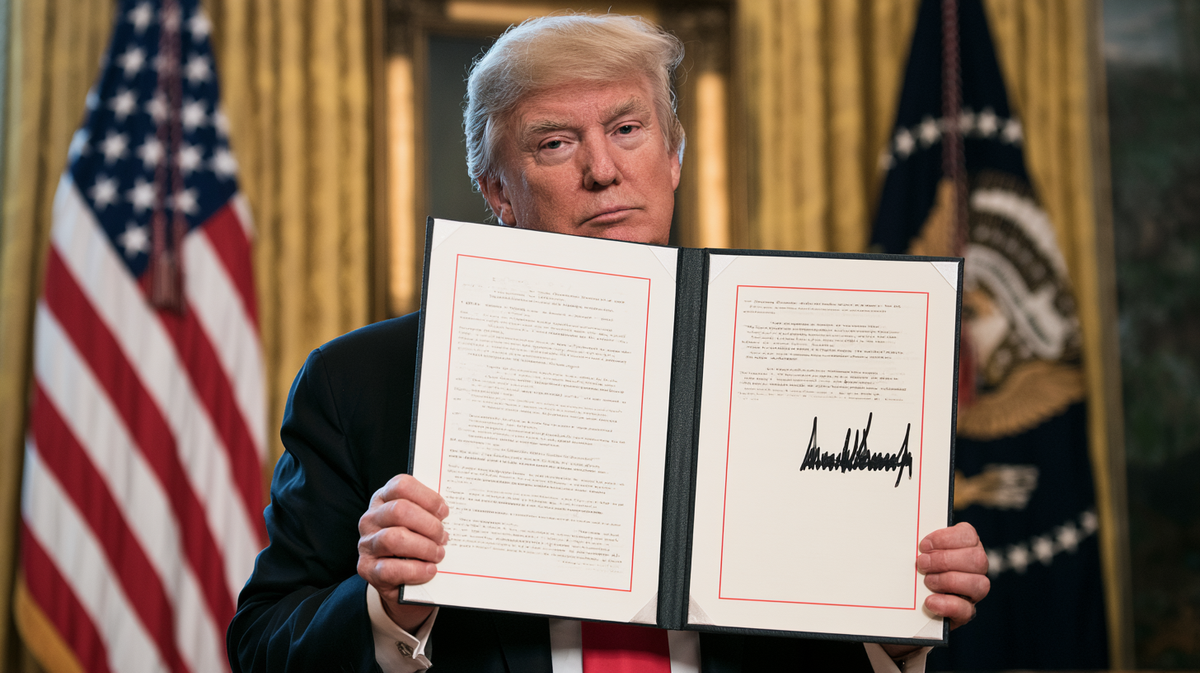
On Tuesday, the President of the United States signed an executive order recommending a reduction in the childhood vaccination schedule from 18 to 11, alongside splitting the combined MMR (Measles-Mumps-Rubella) shot into three separate injections.
Cable news channels immediately erupted into partisan culture wars and medical debates.
This is not a medical update. This is a balance sheet audit.
When executive policy targets a commercial sector's guaranteed distribution model, it breaks a multi-decade financial monopoly. For forty years, the pharmaceutical industry operated under a business model unique in corporate history: government-mandated demand combined with complete legal liability protection.
Lately, several readers have pointed out that macro financial writing often hides behind complex, academic vocabulary without delivering a clear, practical takeaway. Let’s eliminate that flaw completely today.
This briefing is a forensic look at the economics of healthcare monopolies and corporate liability shields. The core message of this article is simple: Guaranteed corporate mandates built on government shields are fragile political constructs. True capital protection requires auditing your exposure to subsidized monopolies, taking control of your physical health, and anchoring your core wealth in hard, non-state reserves.
Elon's path to Universal Basic Income vs. the one that already exists
There are two possible paths to Universal Basic Income (UBI) in America.
Path #1: Wait for Elon Musk's robots to take over the economy, hope the government figures out how to redistribute AI-generated wealth, and pray it happens before you're 85.
Path #2: Enroll in what I call the Patriot Income Plan (P.I.P.) and start collecting 10% a year from America's oil and gas infrastructure immediately.
42 payouts a year. Deposited automatically into your account.
There are zero requirements on your end.
All you need is a photo ID, bank account, social security number, and permanent address. That's it.
One P.I.P. investor collects $4,800 a month. Another pulls in $25,000.
A guy named Weston says he collects $350,000 a year.
I can't verify these claims since they're from the wild west of the Internet.
But I don't doubt them either.
Musk has been tweeting about UBI for a decade. These investors have been collecting it.
The next P.I.P. payout is already on the calendar.
Enrollment is easy.
Click here to see the details
(sponsored)
I. The Mandate Ledger: From Guaranteed Revenue to Regulatory Fracture
When a corporate sector relies on state mandates rather than open market competition for its cash flows, any shift in executive policy sends shockwaves through its financial architecture.
Let us trace the exact six-step financial transmission mechanism:
- The 1986 liability shield granted pharmaceutical companies immunity from civil lawsuits regarding childhood products.
- Guaranteed state mandates created a bulletproof, subscription-like distribution channel with zero customer acquisition costs.
- Wall Street priced these pharmaceutical pipelines as perpetual, low-risk annuity streams with massive profit margins.
- Executive orders and regulatory shifts alter the recommended schedule, unbundling combined products and dismantling guaranteed volume.
- Manufacturing costs triple as single-dose production replaces combined shots, compressing profit margins across global supply chains.
Institutional capital flees subsidized pharmaceutical monopolies, seeking refuge in productive, unencumbered real assets.
THE PHARMA MANDATE & LIABILITY LEDGER
1986 Liability Immunity Shield: 100% Civil Protection Mandated Childhood Schedule (Prior): 18 Recommended Injections Proposed Executive Schedule: 11 Injections (MMR Unbundled) Pharma Revenue at Risk from Mandate Shift: Multi-Billion Dollar Pipeline Individual Health Sovereignty Value: Uncapped / Baseline Asset
The Useful Message: Corporate business models that depend on government mandates rather than market value are vulnerable to sudden political recalibration. When the regulatory shield cracks, the shareholder absorbs the downside.
Check Your Portfolio — These 5 Stocks Are in Trouble
Quick question…
Do you own any of these 5 stocks?
I'm not asking to scare you.
I'm asking because millions of investors are holding stocks that could drop fast.
Behind the scenes, the market is shifting.
And our data just flagged 5 popular stocks worth watching closely.
The new report reveals:
5 stocks to consider selling now
Why these companies are at risk
What smart money is buying instead
Click here to check if you own any of these stocks
(sponsored)
II. Forensic Dissection: The Mandated Subscription Mirage
- The Bait: The corporate establishment pitches state-sanctioned health mandates as immutable, settled science designed strictly for public welfare.
- The Friction: Behind the public health rhetoric lies a commercial model protected from civil liability, allowing corporations to externalize risk while capturing guaranteed profits.
- The Extraction: While retail investors treat pharmaceutical giants as defensive dividend plays, quiet regulatory shifts and unbundling mandates erode the underlying revenue base, leaving passive portfolios exposed to sudden capital losses.
III. The Historical Precedent: Shields, Monopolies, and Corporate Collapse
History offers no comfort to investors who trust government-protected commercial monopolies to last forever. The pattern repeats across industries:
- 1986 (The National Childhood Vaccine Injury Act): Facing severe litigation risks, pharmaceutical manufacturers threatened to halt production unless granted total immunity from civil courts. Congress created a government-managed compensation fund, effectively removing market accountability and laying the foundation for a massive expansion of mandated commercial products.
- 1990s (The Tobacco Master Settlement): For decades, tobacco cartels operated under political protection and guaranteed cash flows. When state-level legal and regulatory frameworks shifted, the industry was forced into a $206 billion settlement, forever altering its dividend safety and corporate valuation multiples.
- 2026 (The Healthcare Unbundling): The executive order unbundling combination shots and scaling back mandated schedules marks the beginning of the end for liability-sheltered commercial pipelines. Relying on government-mandated demand to protect corporate dividends is a proven trap for retail capital.
Building a portfolio on the back of government-protected corporate monopolies is a direct recipe for sudden capital impairment.
IV. The Sovereign Blueprint: Actionable Wealth Protection
If state-mandated corporate monopolies are facing structural disruption, holding passive, unhedged positions in subsidized industries exposes your capital to severe loss. Here is your practical blueprint to insulate your wealth stack:
- De-Risk Unhedged Exposure to Subsidized Pharma Majors Re-evaluate healthcare allocations in your portfolio. Avoid companies whose revenue relies heavily on government mandates, liability shields, or single-source regulatory approvals. Shift capital toward cash-flowing, non-subsidized healthcare infrastructure.
- Treat Health Autonomy as Core Capital Preservation Your physical and cognitive health is the primary baseline of your wealth stack. Bypassing commercial medical traps, eliminating dependency on chronic subscription-style treatments, and focusing on preventative health autonomy insulates your family from systemic institutional failures.
- Build an Unencumbered Hard Asset Core Protect your wealth baseline against both corporate disruption and fiat monetary debasement:
- Physical Gold: Allocated bullion stored in private vaults strictly outside the commercial banking grid.
- Cold-Storage Bitcoin: Self-custodied on hardware wallets as a mathematically fixed, non-state digital reserve.
- Productive Land: Debt-free agricultural or timber land providing real-world utility and physical security.
- Deploy Covered Call Overlays on Healthcare Equities Regulatory uncertainty creates elevated option volatility across major pharmaceutical stocks. Systematically write out-of-the-money covered call options against long positions in this sector to convert market anxiety into immediate, cash-flowing income.
- Establish Jurisdictional Sovereignty & Medical Trusts As central authorities attempt to regulate personal health and financial assets, establish legal trust structures across stable, neutral jurisdictions. Secure your family's medical autonomy and private capital before regulatory controls tighten further.
"When a corporation relies on a law to force citizens to buy its product, it is not a market leader—it is a ward of the state. When the state changes its mind, the shareholder pays the bill."
The liability shield has been challenged, and the mandate model is fracturing. Position your capital stack accordingly.
The math remains absolute.