
The Jones Act Mirage: Why a 90-day waiver cannot fix a debased dollar

The White House officially extended a temporary 90-day waiver of the Merchant Marine Act of 1920 (the Jones Act) for energy and agricultural shipments between U.S. ports. Foreign-flagged vessels are once again permitted to transport oil, gasoline, and fertilizers domestically to curb soaring gas station prices triggered by disruptions in the Strait of Hormuz.
The mainstream press is focusing on election-year optics, consumer sentiment, and retail gas prices.
This is not a political update. This is a balance sheet audit.
The 1920 Jones Act mandates that all goods shipped between U.S. ports must be carried on vessels built, owned, and crewed by U.S. citizens. When the executive branch is forced to repeatedly suspend a century-old statute, it is an open admission of a severe domestic tanker deficit and a complete inability to insulate internal markets from external energy shocks.
Lately, several readers have pointed out that macro financial writing often hides behind complex, academic vocabulary without delivering a clear, practical takeaway. Let’s eliminate that flaw completely today.
This briefing is a forensic look at how the state uses temporary regulatory band-aids to mask real inflation. The core message of this article is simple: Executive waivers do not build physical tankers or drill for crude oil. They merely buy temporary time at the expense of your future purchasing power while the printing press debases your savings. To preserve your wealth, you must de-risk paper liabilities, harvest commodity volatility, and anchor your core reserves in hard, non-state money.
This ‘Superpower’ Turned $2.95 Into $450M+
The Invincible #1 comic book sold for $2.95. Then Skybound turned it into a show generating $450M+ in streaming revenue.
Most creators strike a losing deal with studios: give up their IP; arguably their most valuable asset, in exchange for production funding. Skybound Entertainment, the company behind Invincible, The Walking Dead, and more, refused to go the normal route.
The result? They own the IP for Invincible, the #1 show on Prime Video, four seasons running.
They’ve scaled their IP by creating the comics, built their audience through streaming, and now, they’re entering a new market with the Invincible VS game in April.
Invest in Skybound as they enter the $300B games market set to double by 2030.
This is a paid advertisement for Skybound Entertainment’s Regulation CF offering. Please read the offering circular at https://invest.skyboundentertainment.com/
(sponsored)
I. The Logistics Ledger: From Executive Waivers to Structural Scarcity
When access to global energy chokepoints is restricted, administrative decrees at home cannot override physical supply constraints.
Let us trace the exact six-step financial transmission mechanism:
- A blockade at the Strait of Hormuz chokes global oil transit and spikes international freight rates.
- U.S. domestic supply lines fail to redistribute fuel between states due to a chronic shortage of Jones Act-compliant American vessels.
- The White House issues a 90-day waiver allowing foreign tankers into domestic routes to suppress retail gas station panics.
- Foreign fleets temporarily ease local supply bottlenecks, creating a false sense of security for retail markets.
- Fundamental structural problems—a $36+ trillion national debt stack, refinery bottlenecks, and an inadequate merchant marine—remain entirely unaddressed.
When the 90-day clock expires while unbacked monetary expansion continues, the accumulated inflationary shock hits the consumer with compound interest.
THE JONES ACT & ENERGY LOGISTICS LEDGER
Age of the Merchant Marine Act (Jones Act): 106 Years (Since 1920) Temporary Waiver Extension Period: 90 Days Domestic Jones Act Tanker Fleet: Critically Deficient U.S. Sovereign Debt Stack: $36.2+ Trillion Annual Fiscal Deficit Run Rate: $1.8+ Trillion
The Useful Message: Executive decrees cannot print physical oil tankers or metric tons of fertilizer. A 90-day clock simply postpones the invoice while the real purchasing power of your dollar continues to erode.
II. Forensic Dissection: The Cheap Fuel Mirage
- The Bait: Political leaders promise that allowing foreign vessels into coastwise trade will protect household budgets from soaring gas and food prices.
- The Friction: A temporary waiver creates no new infrastructure or physical raw material. It merely diverts foreign vessels to U.S. ports at the expense of other global trade routes, compounding international supply chain stress.
- The Extraction: While retail investors celebrate temporary price stability at the pump, central banks and the Treasury flood the system with fresh debt. Silent monetary expansion quietly extracts 7% to 10% of real purchasing power annually from cash savings and paper portfolios.
Trump’s EO just cracked open America’s 401(k)s
Washington just opened the door to a rewrite of America’s 401(k)s.
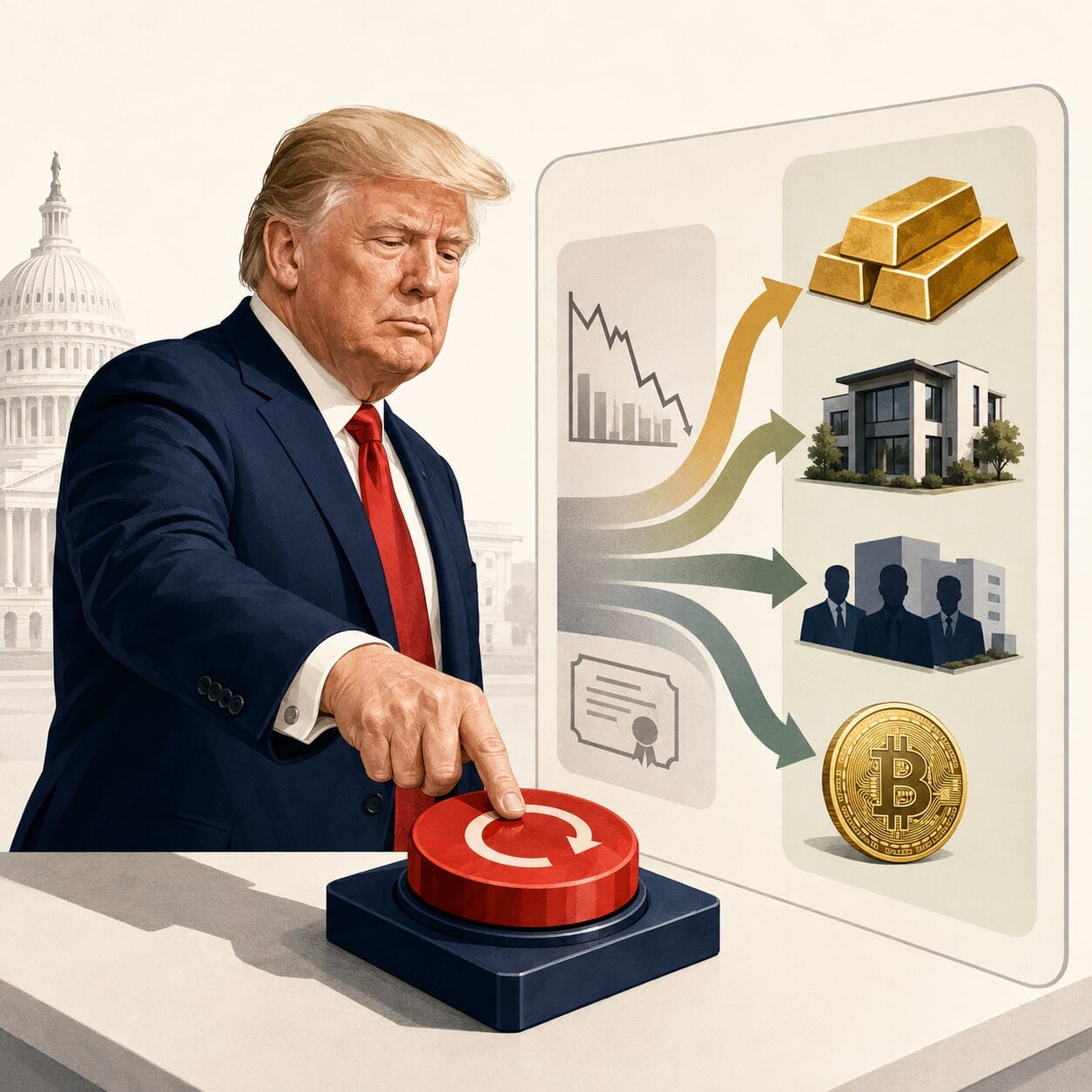
New executive actions are reshaping what could enter retirement accounts — from private equity and crypto to real estate and commodities.
That means the retirement system millions trusted for decades may soon look different.
See what changed before your plan changes with it.
Discover why some retirement savers are moving eligible funds beyond traditional stocks and bonds — and into physical gold.
Then get the FREE Wealth Protection Playbook to learn how a properly structured Gold IRA works, what mistakes to avoid, and what to consider before Washington’s retirement experiment reaches your savings.
(sponsored)
III. The Historical Precedent: Price Controls, Waivers, and Currency Decay
History does not offer comfort to investors who trust administrative edicts during supply shocks. The cyclical pattern repeats across decades:
- 1971–1974 (Nixon's Price Freeze): Faced with compounding inflation and energy friction, President Nixon instituted executive price and wage controls. The result was catastrophic: severe physical shortages, artificial lines at gas stations, and a massive double-digit inflation surge as soon as the administrative band-aids were removed.
- 2005 (Hurricane Katrina Jones Act Waiver): The Bush administration temporarily waived the Jones Act after Gulf Coast refineries were crippled. It provided a brief 30-day reprieve but did nothing to halt the broader commodity supercycle of the 2000s driven by dollar debasement.
- 2026 (The Current 90-Day Extension): Relying on executive waivers to artificially suppress energy, fuel, and fertilizer prices against a backdrop of a $36 trillion national debt stack is a classic sign of late-stage fiat mechanics attempting to override basic laws of economics through administrative edict.
Funding systemic deficits while physical energy supply chains remain choked is a guaranteed recipe for accelerated currency debasement.
IV. The Sovereign Blueprint: Actionable Wealth Protection
If the state relies on overriding its own commercial laws to manage prices, holding passive, paper-denominated assets exposes your capital to structural loss. Here is your practical blueprint to insulate your wealth stack:
- Eliminate Long-Duration Fiat Paper (10Y–30Y Bonds) Executive price suppression always ends in an inflationary rebound, driving yields higher and wrecking long bond principal. Shift fixed-income allocations out of long-duration paper into ultra-short Treasury bills (under 90 days) or transition capital directly into tangible hard assets.
- Invest in Fertilizer Producers and Agriculture The explicit inclusion of fertilizers in the White House waiver signals severe stress in agricultural inputs. Maintain equity stakes in global potash, phosphate, and nitrogen fertilizer producers with tangible physical output.
- Build an Unencumbered Hard Asset Core Hold reserves completely disconnected from central bank debt issuance:
- Physical Gold: Allocated physical bullion held in private vaults strictly outside the commercial banking system as an unencumbered monetary baseline.
- Cold-Storage Bitcoin: Self-custodied on hardware wallets. A digital reserve asset with a hard mathematical cap of 21 million coins stands as the direct structural opposite of paper currency expansion.
- Productive Land: Debt-free agricultural or resource land providing real-world utility independent of global trade routes.
- Deploy Covered Call Overlays on Tanker & Energy Equities Constant 90-day regulatory shifts generate intense volatility in maritime transport and energy stocks. Systematically write out-of-the-money covered call options against your long positions in these sectors to convert market anxiety into immediate, cash-flowing yield.
- Establish Jurisdictional Sovereignty & Asset Protection When governments begin overriding century-old trade laws to control prices, windfall profit taxes and capital controls are never far behind. Utilize legal trust structures across stable, neutral international jurisdictions before financial mobility is restricted.
"A government can suspend a maritime law with the stroke of a pen, but it cannot suspend the laws of supply, demand, and monetary debasement."
The 90-day timer is ticking. Position your capital stack accordingly.
The math remains absolute.