The $37.5 Billion Burn Rate: Iran, Oil, and the Fiat Endgame
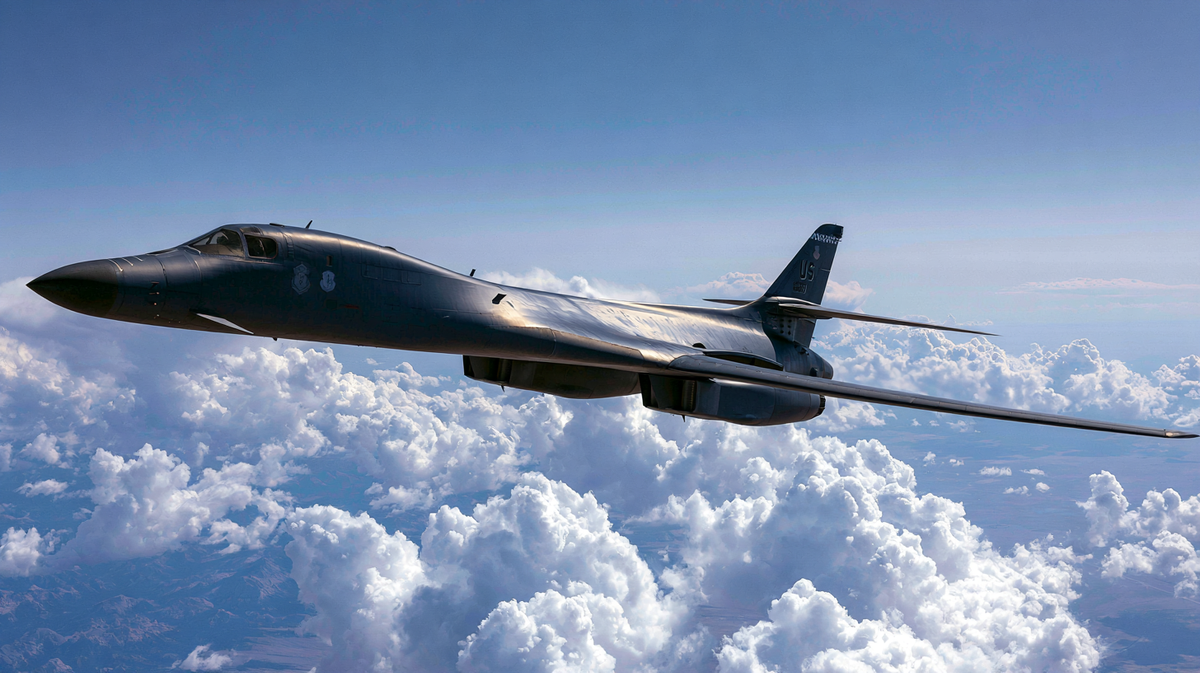
On Tuesday, a U.S. B-1 Lancer bomber took off from a base in the United Kingdom, crossed European airspace, and dropped precision munitions on targets deep inside Iran. It marked the first long-range heavy bomber mission since fighting escalated twelve days ago. U.S. Central Command chose silence. The press confirmed the flight.
This is not a military update. This is a balance sheet audit.
Every bomb dropped over the Middle East is purchased with dollars printed by a U.S. Treasury that is currently asking Congress for an emergency $200 billion supplemental defense allocation. At the same time, every barrel of crude stuck outside the Strait of Hormuz fundamentally reprices global energy against paper money.
Lately, several readers have pointed out that macro financial writing often hides behind overly complex, academic vocabulary without delivering a clear, practical takeaway. Let’s eliminate that flaw today.
This briefing is a forensic look at the cost of geopolitical conflict. The core message of this article is simple: Unfunded military escalations funded by money printing act as an aggressive, hidden tax on your purchasing power. When war burns $37.5 billion at $21,800 per second while key oil chokepoints close, paper liabilities lose value fast. To preserve your wealth, you must de-risk fiat assets, harvest energy volatility, and anchor your core reserves in hard, non-state money.
It has nothing to do with AI, tech, or precious metals. Most investors have never heard of it.
But every time the Fed has made a major move, this ticker has moved with it… and the profits have been extraordinary.
117% in under a month. 89% in seventeen days. 35% in two days.
Now Trump is triggering the biggest Fed shift in nearly 20 years.
I. The Escalation Ledger: From Targeted Strikes to Total War
Let's look at the raw numbers behind the military operations before official press releases spin them.
Operation Epic Fury launched on February 28, 2026, framed as a "limited, targeted campaign." The initial strike wave hit over 2,500 targets simultaneously—making it the largest American military deployment in the Middle East since 2003.
By Day 12, the burn rate reached $11.3 billion for six days of combat. That is $1.88 billion per day, or $21,800 per second.
                 THE MILITARY BURN RATE & DEFENSE INFLATION

Current Direct Conflict Spend (To Date):     $37.5 Billion
Daily Operational Combat Burn Rate:         $1.88 Billion / Day ($21,800 / Sec)
Emergency Supplemental Request to Congress:  $200.0 Billion
Proposed FY2027 Total Defense Budget:        $1.5 Trillion
Repurposed Internal Training/Gear Funds:     $4.3 Billion
Defense Secretary Pete Hegseth confirmed to Congress this week that direct war costs have reached $37.5 billion. To keep the operation running, the Pentagon is requesting a $1.5 trillion defense budget for fiscal year 2027, while shifting $4.3 billion away from domestic training and equipment procurement just to cover immediate fuel and munitions gaps.
The Useful Message: Military campaigns sold as "contained" always expand. When a government funds open-ended conflict through deficit spending, it doesn't just spend money—it dilutes the purchasing power of every dollar sitting in your bank account.
Hi, I'm Dylan Jovine
What a drilling team uncovered deep beneath Utah left everyone speechless.
This unexpected discovery in Beaver County has people saying it could change everything.
II. The Energy Chokepoint: Hormuz, Houthis, and $94 Oil
While military budgets explode, the physical supply lines powering the global economy are fracturing.
Brent crude surged past $94 per barrel on July 22, 2026—marking a 21.6% jump in a single month and a 36.8% rise year-over-year. Both Brent and West Texas Intermediate (WTI at $84.91) have remained in overbought territory for seven consecutive trading sessions.
This is not a temporary "war premium." It is a structural transportation shock:
- The Strait of Hormuz: Typically carrying 20% of global petroleum traffic, daily tanker transits dropped to just four ships on Sunday, down from eight the previous day, as naval blockades and active fire freeze commercial shipping lanes.
- The Red Sea & Bab el-Mandeb: Houthi forces launched targeted attacks on Saudi-flagged tankers, forcing ships carrying crude to China and India to turn back in the Red Sea and reroute around Africa.
- Black Sea Interruption: The Caspian Pipeline Consortium halted tanker loadings following drone strikes on regional maritime infrastructure.
When tanker captains refuse to enter shipping lanes due to military risk, no amount of central bank interest rate manipulation can print physical barrels of oil. Energy is repricing based on real-world supply constraints, and that cost increase feeds directly into global consumer prices.
Breaking: China’s Military Drills Escalate Near Taiwan
When military drills stop looking like drills, analysts pay attention.
This is one of those moments.
III. The Historical Precedent: Debt, War, and Currency Decay
History does not offer comfort to empires that fund open-ended conflicts on credit. The pattern repeats across centuries:
- 1966–1971 (Vietnam Era): Unfunded war spending combined with expanding domestic budgets strained federal reserves, ultimately forcing President Nixon to sever the dollar's final link to gold in 1971. The dollar lost over half its purchasing power over the following decade.
- 2003–2008 (Iraq Era): Initial war cost estimates of $50 billion eventually swelled into a $2 trillion debt obligation. That massive expansion of Treasury debt flooded global markets, fueling the credit expansion that led to the 2008 financial crisis.
- 2026 (Current Escalation): U.S. sovereign debt stands above $36 trillion, running a baseline annual deficit of $1.8 trillion before accounting for the new $37.5 billion war tab or the $200 billion supplemental request.
Replacing expended high-tech munitions—such as Tomahawk cruise missiles, Patriot interceptors, and THAAD batteries—takes an estimated three years of industrial manufacturing time. Paying $1.88 billion per day for active combat while industrial supply chains remain constrained is a direct recipe for monetary debasement.
IV. The Sovereign Blueprint: Actionable Wealth Protection
If government spending is escalating at $21,800 per second while energy transportation routes fracture, holding passive, paper-denominated assets exposes your capital to structural loss.
Here is your practical blueprint to insulate your wealth stack:
1. Re-Anchor in Physical Energy and Commodities
Oil at $94 is not a short-term trade; it reflects a permanent shift in global logistics. Maintain exposure to primary energy producers, critical mineral suppliers, and physical commodity infrastructure that generate cash flow regardless of maritime blockades.
2. Reduce Unhedged Fiat Liabilities and Long Bonds
With war spending driving multi-billion-dollar daily deficits, long-duration government bonds deliver guaranteed negative real returns after accounting for inflation. Minimize duration and treat fiat cash as an active exposure to currency debasement.
3. Hold Invariant, Non-Counterparty Hard Assets
Anchor your core wealth stack in assets that cannot be printed by a government or blocked by maritime conflict:
- Physical Gold: Stored strictly outside the commercial banking system as an unencumbered monetary baseline against fiat debasement.
- Bitcoin: Maintained in self-custody cold storage. A digital asset with a hard-coded mathematical limit of 21 million coins stands as the direct structural opposite of an expanding national debt stack.
- Productive Land: Debt-free agricultural or timber land that generates real-world, tangible utility independent of international trade agreements.
4. Deploy Covered Call Overlays for Income
Geopolitical escalations drive high option volatility across energy and defense stocks. Systematically write covered call options against your long equity positions in these sectors. This converts market anxiety into immediate, cash-flowing option premiums.
5. Diversify Legal Jurisdictions
When central governments face compounding fiscal strains from conflict, they historically turn to domestic wealth extraction—such as capital controls or emergency financial regulations. Utilize legal trust structures across stable, neutral jurisdictions to protect your assets before capital mobility is restricted.
"When governments spend money they do not have on conflicts with no clear exit strategy, the bondholder and the cash saver always pay the invoice."
The military operations over Iran are burning cash at a rate of $21,800 per second. The cost of that escalation will not be paid through balanced budgets—it will be extracted from the purchasing power of your savings.
De-risk your fiat paper, secure hard assets, and position your capital stack accordingly.
The math remains absolute.