
The $100 Billion Tariff Refund: Why the Supreme Court's Ruling Is a Deficit Surge

The United States Department of the Treasury has officially initiated payouts for a massive $100 billion refund obligation to American importers. The disbursements follow a landmark Supreme Court ruling declaring previously imposed executive tariff restrictions unconstitutional and ordering full restitution of illegally collected import duties alongside statutory interest.
Legal scholars are framing the decision as a triumph of constitutional checks and balances. Corporate trade associations are celebrating the return of seized working capital.
Strip away the courtroom drama.
This is not merely a story about executive overreach or trade law. It is an unbudgeted fiscal shock to a sovereign treasury already operating with a $36+ trillion national debt stack and annual budget deficits exceeding $2 trillion.
Lately, several readers have rightly noted that macro financial commentary often hides behind academic jargon without delivering a clear, practical takeaway. Let's eliminate that flaw today.
The core message of this briefing is simple: Governments do not hold $100 billion in idle cash reserves to pay judicial judgments. Returning $100 billion to corporate importers requires the Treasury to issue new debt, directly accelerating central bank currency debasement. To protect your wealth, you must de-risk unhedged paper liabilities, harvest option volatility across retail and import equities, and anchor your primary reserves in hard, non-state assets.
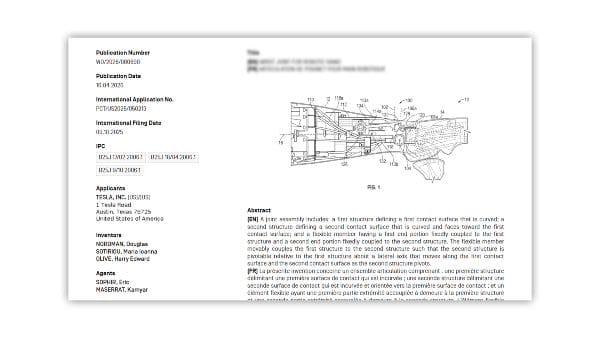
Take a look at Elon Musk’s new patent below…
Because it protects a new invention that could rewrite the future of wealth forever.
I’m talking about a radical new form of AI I call “M.A.G.I.”
One so revolutionary that Elon called it an “infinite money glitch.”
Click here to see the details because he believes this is a once-in-a-generation opportunity to create wealth on a scale most people can’t even comprehend.
What’s the upside potential here?
I know this is going to sound crazy…
But Elon is projecting growth of over 7,000,000%.
Let that sink in.
That’s enough to turn $100 into more than $7 million.
This sounds absolutely insane.
But then again… everything Elon has ever done sounded insane at first.
Self-driving cars.
Reusable rockets that land themselves.
Brain chips that let paralyzed people control computers with their minds.
Crazy ideas.
But he turned them into trillion-dollar realities.
So here’s the real question…
Will you watch Elon build another empire from the sidelines…
Or will you finally position yourself to potentially become one of the winners in his next trillion-dollar revolution?
Click here to get the details because I believe Elon will flip the switch on this new invention by the end of this month.
(ad)
I. Anatomy of a $100 Billion Judicial Reversal
Let's look directly at the hard operational facts before news outlets reduce this event to partisan talking points:
- The Judicial Mandate: The Supreme Court ruled that executive emergency declarations used to unilaterally impose broad import tariffs violated constitutional separation of powers, rendering billions in collected duties illegal ab initio.
- The Refund Scale: Total court-ordered restitution—encompassing refunded duty payments and required accrued interest—is confirmed at approximately $100 billion.
- The Disbursing Mechanism: The U.S. Treasury, through U.S. Customs and Border Protection (CBP), has begun issuing direct cash reimbursements to thousands of qualifying U.S.-based importers, logistics firms, and industrial manufacturers.
               COURT-ORDERED TARIFF REFUND METRICS (AUGUST 2026)

Total Refund Obligation:           ~$100,000,000,000 (Principal + Statutory Interest)
Primary Recipient Group:           U.S. Corporate Importers, Retailers, Manufacturers
Funding Source:                    Fresh U.S. Treasury Debt Issuance (T-Bill Auctions)
Immediate Balance Sheet Impact:   Surge in Corporate Cash / Expansion of Federal Deficit
Consumer Price Impact:             Minimal Immediate Reduction in Retail Shelf Prices
Media headlines celebrate this as a "windfall for business."
The financial archivist sees the underlying mechanism: the state collected $100 billion over several years, spent those funds on past budget deficits, and must now borrow $100 billion in brand-new money from global credit markets to pay the refund.
Stop.
Before you do anything else today —
Grab this.
It's called The Bellweather Signal — a report that identifies 7 warning signs that have predicted every major economic collapse since 1929.
All 7 are flashing red right now.
Investment firms pay $5,000+ for intelligence like this.
Financial newsletters sell it for $97.
For the next few minutes — it's free.
No strings. No credit card. No catch.
Just click below, tell me where to send it, and it's yours instantly.
I've helped conservative Americans protect their wealth for 15 years.
This is the most important thing I've ever put together.
And I refuse to let another good person get blindsided by a crisis the insiders already see coming.
The free copies won't last.
(ad)
II. The Fiscal Reality: How the State Pays Its Legal Debts
A sovereign state operating with a persistent fiscal deficit does not maintain a cash vault for legal liabilities.
When the Supreme Court orders the Treasury to disburse $100 billion, the mechanics of public finance dictate the exact path forward:
- Fresh Debt Auction: The Treasury auctions new short-duration Treasury bills (T-bills) to raise $100 billion in liquid funds.
- Increased Debt Service: The national debt grows immediately by $100 billion, expanding ongoing annual interest payment obligations.
- Monetary Base Expansion: To prevent T-bill yields from spiking during massive sudden auctions, the central bank maintains elevated liquidity backstops, expanding total fiat credit baselines.
The establishment claims this refund is "non-inflationary" because it represents returned money.
The archival record proves otherwise. The original $100 billion was already absorbed into past federal spending cycles. Generating $100 billion in fresh Treasury debt to reimburse corporate balance sheets represents a net liquidity injection into the financial system, accelerating the underlying rate of currency dilution.
III. The Corporate Capital Fallacy: Will Consumer Prices Drop?
A common myth circulated by market analysts suggests that returning $100 billion to corporate importers will immediately reduce retail prices for American consumers.
Corporate capital allocation decisions follow cold balance sheet incentives:
- Margin Restoration: Major importers whose profit margins were squeezed by elevated borrowing costs and high input prices will retain the bulk of these refunds to repair corporate balance sheets, pay down high-interest corporate debt, or execute stock buybacks.
- Persistent Supply Chain Costs: Shipping overhead, insurance premiums, and labor expenses remain elevated. A lump-sum historical tariff refund does not lower current baseline operational expenses.
- Liquidity Disconnect: While corporations receive immediate cash infusions, average households continue to absorb the cumulative price increases built into the economy over the past four years.
The Useful Message: A court-ordered tariff refund is a corporate balance sheet restructuring event, not a consumer price relief package. The cash flows to corporate treasuries, while the long-term debt burden settles onto currency holders.
IV. The Sovereign Blueprint: Actionable Capital Preservation
When sovereign governments are forced to fund multi-billion-dollar judicial judgments through debt expansion, holding unhedged paper assets guarantees an ongoing loss of real purchasing power.
Here is your practical, step-by-step blueprint to protect your capital stack:
1. Audit Import-Dependent Corporate Equities
Corporate importers and large-scale retailers receiving portioned cash refunds will experience temporary balance sheet liquidity surges. Evaluate your equity holdings to identify companies utilizing these refunds to pay down debt or repurchase shares, while trimming positions in firms using temporary windfalls to disguise structural operating losses.
2. Harvest Options Volatility via Covered Calls
Major legal decisions and sudden corporate cash injections create elevated option implied volatility across retail, industrial, and transportation sectors. If you maintain long equity positions in high-quality corporate names, systematically write covered call options against those shares to convert market swings into immediate, cash-flowing option income.
3. De-Risk Long-Duration Paper Liabilities
Adding $100 billion in unbudgeted liabilities to an expanding federal deficit increases the long-term supply of Treasury bonds hitting the market. Reduce exposure to long-duration, fixed-rate paper assets that suffer price erosion when sovereign debt issuance expands.
4. Anchor Core Reserves in Invariant, Non-State Hard Assets
Insulate your primary purchasing power from court-driven fiscal expansions and fiat currency debasement:
- Physical Gold: Stored strictly in private, audited vaults outside the commercial banking grid. No court order or legislative vote can alter its physical supply or degrade its monetary baseline.
- Self-Custody Bitcoin: Maintained in offline cold storage hardware. Its cryptographically fixed limit of 21 million coins stands as a direct structural counterweight to expanding Treasury debt issuance.
- Productive Real Estate: Debt-free agricultural or commercial land generating local, tangible rental or material income independent of government trade policy shifts.
5. Establish Multi-Jurisdictional Capital Protection
As sovereign treasuries manage expanding deficits and unbudgeted legal liabilities, domestic tax authorities historically seek new revenue streams through administrative fee increases or capital transaction levies. Utilize legal trust structures across neutral, stable jurisdictions (such as Singapore or New Zealand) to protect your assets before capital mobility restrictions are imposed.
"When the state is ordered to pay $100 billion it does not have, it does not cut spending; it borrows the difference and passes the invoice to holders of its paper currency. Capital preservation is the discipline of converting judicial liquidity events into permanent hard wealth."
The Supreme Court has spoken, the Treasury is issuing $100 billion in refunds, and the national debt continues its absolute upward trajectory.
Look past the legal headlines, audit your paper liabilities, harvest option volatility, and anchor your wealth stack in hard assets.
The math remains absolute. Position your capital stack accordingly.