
Iran Named Seven Conditions, Trump Called It "Trump Strait," and the Gaps Are "Very Big" With 29 Days Until the Election.
Julian Alden
— 10 min read

War Diplomacy Audit
Iran Rejected the U.S. Proposal, Labeled Hormuz Sovereign Territory, and Named Seven Conditions. Trump Posted a Map Calling It "Trump Strait" and Said "Easy Way or Hard Way."
The diplomatic track has hit its clearest impasse since February. Iran proposed a seven-day Hormuz reopening plan contingent on a full Middle East ceasefire and U.S. compliance with its conditions — Trump rejected it publicly Saturday and renamed the strait "Trump Strait" on Truth Social. Iran's Parliament Speaker Ghalibaf confirmed Sunday that IRGC attacks will not stop until seven Iranian conditions are met. Iran simultaneously sent a ten-point counter-proposal via Pakistan rejecting a ceasefire and demanding permanent end to hostilities. Araghchi says Iran awaits the formal U.S. position through mediators. The gaps, per i24NEWS, are "very big." The Archive reads the week's diplomatic record — and what it means for Brent, October 15, and the November 3 electoral calendar.
The week produced the most specific documentation of the negotiating gap since the war began in February. Iran's seven-day plan, conveyed through Qatar at the UN General Assembly: a full ceasefire across the Middle East for seven days — including Lebanon — with Hormuz reopening on day seven if U.S. conditions are met. Trump's Saturday response: "I reject their proposal." His simultaneous Truth Social post: a map of the Strait of Hormuz circled and labeled "Trump Strait." Iran's ten-point counter-proposal, sent via Pakistan: a permanent end to hostilities rather than a temporary ceasefire, with conditions including sanctions lifting, reconstruction arrangements, and international recognition of Iranian authority over Hormuz. IRGC spokesman Hossein Mohebi: "We will not cease punishing the U.S. until Iran's seven conditions are met." Ghalibaf Sunday: attacks continue until all conditions are fulfilled. Araghchi: the formal U.S. position has not yet been conveyed through mediators. The Archive reads this as a documented breakdown of the pre-election diplomatic track — not as a permanent end to negotiations.
Fiduciary Recommendation — Ad
|

I.The Negotiating Record: What Each Side Has Proposed and Rejected
The U.S. 15-point plan: nuclear dismantlement, missile curbs, Hormuz handover.
The U.S. proposal — informally referred to as the "Islamabad Accord" framework — reportedly contained 15 points ranging from dismantling Iran's nuclear program and curbing its ballistic missiles to effectively granting Washington authority over the Strait of Hormuz framework. Iran rejected it Wednesday, called it "a ploy," and Araghchi told reporters: "Iran does not accept coercion, threats or intimidation, and Iran will not surrender its sovereign rights under pressure." The White House characterized the same period as talks being "positive and constructive." Both statements can be simultaneously accurate: the back-channel tone was constructive while the specific proposal was rejected. The Archive reads that combination as a negotiation that is alive at the process level and deadlocked at the substance level.
Iran's seven-day plan: ceasefire first, Hormuz seventh day, sovereign rights non-negotiable.
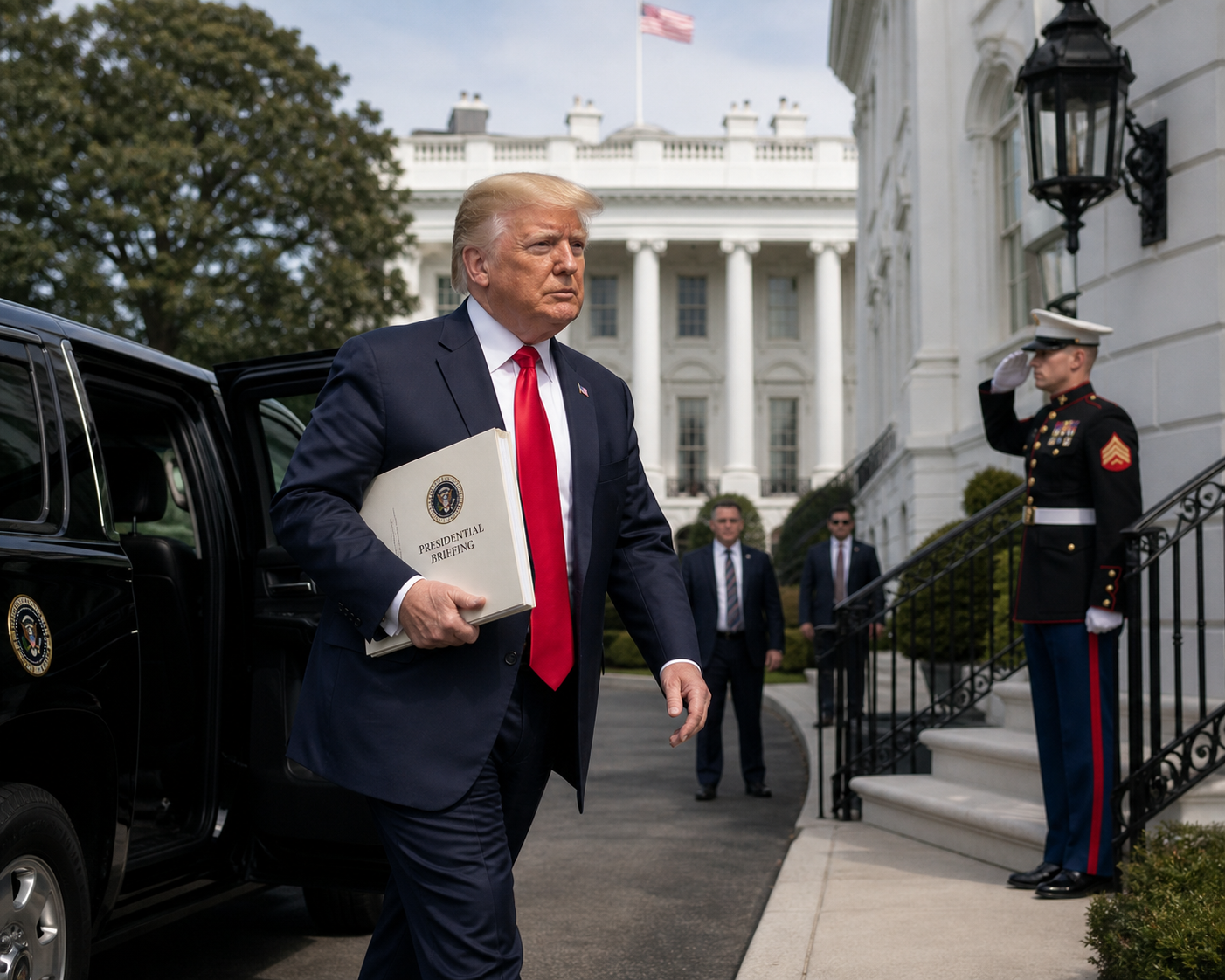
Araghchi at the UN General Assembly Thursday: "Iran has conveyed to the United States, through Qatar, a concrete seven-day plan. If the necessary conditions are met, the strait can be reopened, and normal maritime passage restored within seven days." The conditions: a full ceasefire across the Middle East — including Lebanon — for seven days, with Hormuz reopening on day seven. Iran's senior official told Reuters separately that Iran would show "no flexibility" over its nuclear program even if the U.S. accepted the Hormuz proposal. The nuclear and the Hormuz tracks are not separable in Iran's framework — they are both components of the same demand for sovereignty recognition. Trump's Saturday public rejection — "I reject their proposal" — followed within hours of Araghchi's UN statement. The map post calling it "Trump Strait" is the specific counter-signal: Washington claims jurisdiction over the waterway Iran claims as sovereign territory.
Iran's ten-point counter via Pakistan: permanent end, not ceasefire. The gap is structural.
Iran's formal ten-point response, sent through Pakistan, rejected the ceasefire component of the U.S. proposal and instead demanded a permanent end to hostilities — plus sanctions lifting, reconstruction arrangements, and Hormuz sovereignty guarantees. A source told i24NEWS: "The gaps are very big." The Archive reads "very big gaps" between a 15-point U.S. proposal requiring nuclear dismantlement and an Iranian counter-proposal requiring permanent end to hostilities, sanctions relief, reconstruction, and Hormuz sovereignty recognition as: the two sides are not negotiating from compatible frameworks. They are each stating their maximum position in the hope that the other side's electoral or economic pressure forces movement. The question is whose pressure runs out first — and Trump has already told the market: the war ends after November 3.
U.S. Position
15-point plan: nuclear dismantlement + missile curbs + Hormuz framework. Temporary ceasefire as Phase 1. "Trump Strait" — Washington claims jurisdictional framing. "Easy way or hard way." Bombing resumes after midterms per WSJ sources.
Iran Position
10-point counter: permanent end to hostilities + sanctions lifted + reconstruction + Hormuz sovereign recognition. Zero flexibility on nuclear program. Seven conditions must be met before attacks stop. "Iran will not surrender its sovereign rights."
II.Forensic Dissection: What "Trump Strait" and "Sovereign Rights" Are Actually Negotiating
The Bait
The "Trump Strait" post and Iran's "sovereign rights" language appear to be a territorial dispute — a fundamental disagreement about who controls the waterway. This framing makes the negotiation look like a conflict of principle rather than a transaction. The conventional read is that sovereignty claims are non-negotiable and therefore the deadlock is permanent. The Archive reads both the "Trump Strait" post and Iran's sovereign rights language as negotiating positions, not final states. The U.S. framing of the strait as "Trump Strait" is the counter-signal to Iran's sovereignty claim — it is Washington asserting that Iran's claim to Hormuz is not internationally recognized and will not be the basis for a deal. Iran's sovereign rights language is the counter-signal to the U.S. 15-point plan that includes Hormuz in the negotiating package. Neither position is where a final deal would land — they are the opening claims from which a compromise framework would be constructed.
The Friction
The friction is the calendar asymmetry. Trump has publicly stated the war ends "immediately after the election" — which means November 3 is Washington's publicly announced de-escalation date regardless of what Iran agrees to. Iran's Parliament Speaker Ghalibaf has stated attacks will not stop until seven conditions are met — with no timeline attached. The WSJ reported Saturday, citing U.S. officials, that Trump expects the military bombing campaign to resume after the midterms. That means both sides are operating on the assumption that the current period is a pre-election negotiating window that ends November 3 — after which either a deal is in place or the military track resumes. The gaps are "very big" with 29 days remaining. The Archive does not read the current deadlock as the end of negotiations. It reads it as the point where both sides are signaling their maximum position before the pre-election window closes.
The Extraction
The extraction for the sovereign investor is Brent pricing. The current deadlock — Iran's seven conditions, U.S. rejection, "Trump Strait" vs "sovereign rights," IRGC attacks continuing — is the most fully documented impasse of the cycle. It tells the Archive that the pre-election diplomatic track has failed to produce the framework agreement that would move Brent below $95 before October 15. The Iranian diplomatic premium is now re-embedding after the September 22 signal's partial decompression. Brent at $99–100 reflects the market's assessment that the current deadlock persists through November 3. If the gaps narrow — if mediators convey a U.S. response that Iran characterizes as movement — Brent moves before the communiqué. If the gaps hold at "very big" through the October 15 survey period, October 15 CPI captures September's full energy cost at the current war premium level. The Archive reads the week's diplomatic record as the most bearish possible update for the October 15 CPI inflation outlook.
"Trump rejected Iran's seven-day plan Saturday and posted a map calling the Strait 'Trump Strait.' Iran rejected Trump's 15-point plan Wednesday and sent a ten-point counter requiring permanent end to hostilities. The IRGC said attacks won't stop until seven conditions are met. Ghalibaf confirmed Sunday. Araghchi says the formal U.S. position has not yet been conveyed through mediators. The Archive's read: both sides are at their maximum positions 29 days before an election that Trump has publicly said ends the war. Maximum positions before a deadline are not the same as permanent positions. The question is not whether a deal is possible — it is whether the gap can close from 'very big' to 'framework agreement' before November 3. The Archive gives that 29-day window a lower probability today than it did Monday."
Fiduciary Recommendation — Ad
|
III.The Sovereign Blueprint: Three Positions After the Deadlock
The Pre-Election Diplomatic Track Has Failed — Brent Holds the War Premium Through October 15
The Archive's scenario tree from Tuesday's Araghchi deadline had two branches: Iran signals engagement with the terms framework, or Iran rejects and the pre-election window closes. The week's record — Iran's formal rejection via Pakistan, the ten-point counter, Ghalibaf's Sunday statement, the "very big" gaps — closes the first branch. The pre-election diplomatic track has not produced a framework agreement. Brent at $99–100 holds the war premium through October 15 unless a new signal emerges from the back-channel that the public record does not yet reflect. The Archive reverts to its pre-August PCE base case: October 15 CPI captures September's full energy cost at the current war premium level. The second branch — Iran signals movement before October 15 — now requires something that contradicts the entire public record of this week. The Archive watches for it but does not price it as probable.
"Easy Way or Hard Way" Is the Post-Election Signal — Not a Pre-Election Ultimatum
Trump's "easy way or hard way" language is the third time in the cycle he has framed the Iran decision as binary: in March ("deal or decimated"), in September ("we don't need China's help" followed by the tarmac welcome), and now. The Archive reads the pattern: the binary public framing precedes a back-channel negotiating development. The "easy way or hard way" statement arrived the same weekend as Trump rejected the Hormuz plan and renamed the strait. It is the public positioning before the next back-channel round — specifically the formal U.S. response through mediators that Araghchi said has not yet been conveyed. The Archive watches for that mediator response as the next diplomatic signal. When it arrives, the "easy way or hard way" framing is the context that prices the market's reaction.
December Fed Meeting Now Prices the War's Duration — Not Just September's Energy Costs
The diplomatic deadlock has a December FOMC consequence that the Archive has not previously stated this explicitly: if the war's pre-election diplomatic track has failed, and if Trump's stated post-election posture is to resume bombing — per WSJ's Saturday reporting — then the post-November 3 energy price environment is not the de-escalation that the oil market's current $99 Brent prices. A post-election resumption of military operations at higher intensity produces a Brent trajectory that re-approaches $108+ and a December FOMC meeting that prices a genuinely different inflation environment than the current one. The Archive adds the post-election military posture as the December FOMC variable that the dot plot did not price on September 16. Watch November 4's oil market open — if Trump's post-election military communication is escalatory, the December hike probability re-prices immediately.
Iran rejected the U.S. 15-point proposal. Trump rejected Iran's seven-day Hormuz plan. Trump posted "Trump Strait." Iran sent a ten-point counter via Pakistan demanding permanent end to hostilities. Ghalibaf Sunday: attacks continue until seven conditions are met. The gaps are "very big" with 29 days until the election. The Archive closes the pre-election diplomatic branch of its scenario tree. Brent holds the war premium through October 15. The October 15 CPI captures September's full energy cost. The December FOMC prices not just September's energy — it prices what November 4's military posture produces. Watch the mediator's formal U.S. response transmission. That is the only remaining variable that could reopen the branch the Archive just closed.
THE MATH REMAINS ABSOLUTE.