Chinese Satellite Imagery Helped Iran Kill Three Americans in July — and Xi Jinping Lands in Washington in 10 Days.
Intelligence Capital Audit
Chinese Satellite. Iranian Missile. Three Dead Americans. Ten Days Before Xi Lands in Washington.
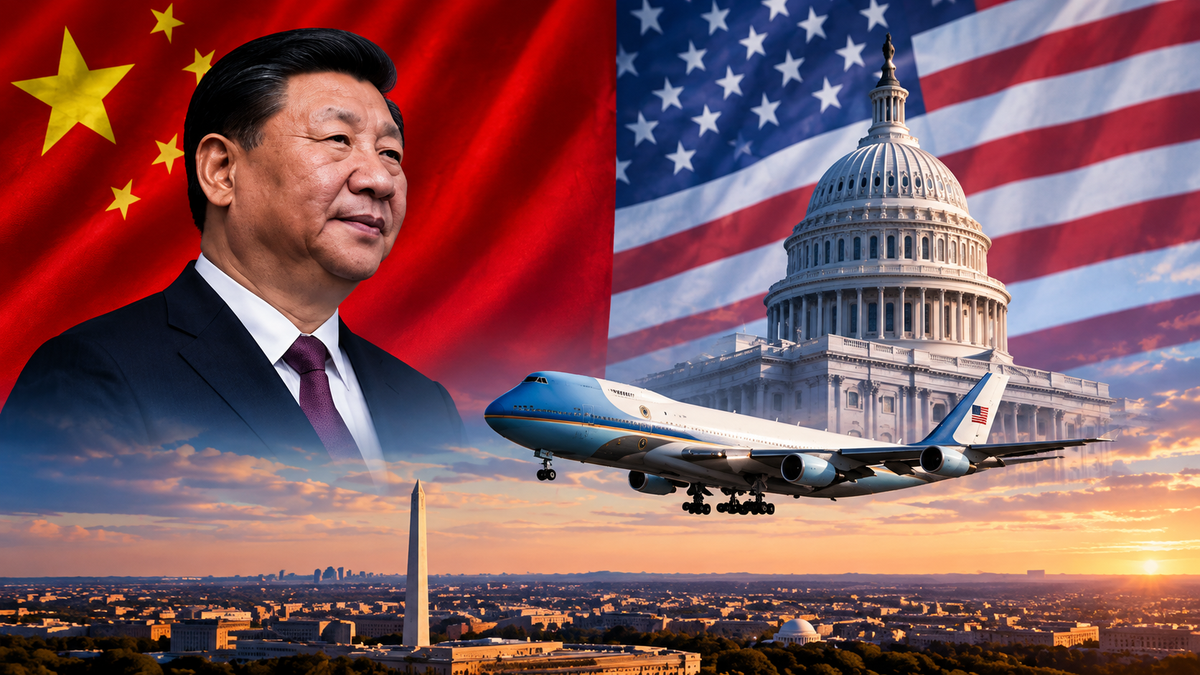
The Wall Street Journal reported Friday, citing U.S. officials: before Iran struck Muwaffaq Salti Air Base on July 17 — killing First Lieutenant Tyler James Feehan, Private Isabella Gonzales, and Sergeant Angel S. — Iranian planners used high-resolution satellite imagery obtained from Chinese entities. The imagery covered the base before and after the attack. U.S. officials called it the clearest evidence to date that Chinese support for Iran has had lethal consequences for American forces. Xi Jinping arrives in Washington on September 24.
On July 17, Iranian ballistic missiles struck a housing area at Muwaffaq Salti Air Base in northeastern Jordan while U.S. troops were sleeping. Three American soldiers were killed and four wounded. The strike was one of three missile attacks on the base within a 24-hour span and represented the first American combat deaths since an April ceasefire in the conflict. The Wall Street Journal reported Friday that before the attack, Iran had obtained high-resolution satellite imagery of the base from Chinese entities. U.S. officials connected the imagery to the strike's targeting precision — Iranian missiles hit the housing area directly. Within three days of the attack, Iran published high-resolution imagery documenting damage across three sections of the base — images more detailed than the lower-resolution commercial satellite imagery WSJ's own analysis had reviewed, which showed harm to more than 20 structures.
Timeline: From Chinese Imagery to Washington Summit
May 2026
U.S. sanctions three Chinese firms — MizarVision, Earth Eye, Chang Guang — for selling satellite imagery usable against American forces. U.S. officials had been warning Beijing for months.
Before July 17, 2026
Iran obtains high-resolution satellite imagery of Muwaffaq Salti Air Base from Chinese entities. Imagery includes housing areas and aircraft positions.
July 17, 2026 — Strike
Iranian ballistic missiles hit housing area at Muwaffaq Salti. Lt. Tyler James Feehan, Pvt. Isabella Gonzales, Sgt. Angel S. killed. Four wounded. One of three strikes in 24 hours. First U.S. combat deaths since April ceasefire.
July 20, 2026
Iran publishes high-resolution post-strike imagery showing damage to three sections of the base — more detailed than publicly available commercial satellite imagery. 20+ structures damaged visible.
September 11, 2026
WSJ publishes report citing U.S. officials. "Most compelling proof to date" of lethal Chinese support for Iran. U.S. officials raised issue with Beijing — China denied and demanded evidence.
September 24, 2026 — 10 days away
Xi Jinping arrives in Washington. Planned summit with Trump. WSJ report now embedded in the diplomatic context of every agenda item.
U.S. officials did not name the Chinese firms involved in the July imagery transfer and did not accuse the Chinese government of directly ordering or authorizing it. Washington had already sanctioned three Chinese companies in May — MizarVision, Earth Eye, and Chang Guang — for selling satellite imagery that Iran could use for targeting. China denied the allegations in May. Following the WSJ report, Chinese Embassy spokesperson Liu Chang in Washington did not address the specific claim and accused unnamed parties of "maliciously linking and smearing other countries." A White House official told the Journal that "no outside assistance had improved Iran's ability to strike American targets" — without addressing the imagery findings directly. Trump, flying back from Ireland on Sunday, said: "China spies on us, we spy on them" — naming no specific entities, drawing no specific consequences.
The Archive reads three things simultaneously. First: U.S. officials described this as "the clearest indication so far that Chinese support for Iran during the war has had lethal consequences for American forces" — a documented intelligence assessment, not an allegation. Second: U.S. officials are also concerned that Chinese data may be helping Tehran identify targets among U.S. military ships in the region — which means the three sailors and soldiers lost in the strait and the July base attack may not be the complete casualty accounting from Chinese-sourced imagery. Third: Xi Jinping lands in Washington in 10 days.
Fiduciary Recommendation — Ad
|
I.What the WSJ Report Changes — and What It Does Not
The "entity, not government" distinction is the diplomatic off-ramp — and its ceiling.
U.S. officials did not name the Chinese companies involved and did not accuse Beijing of directly ordering the transfer. This framing — Chinese entities, not the Chinese government — is the language that allows Washington to raise the issue without triggering formal state-to-state escalation. The Trump administration used the same framing in May when it sanctioned MizarVision, Earth Eye, and Chang Guang. The off-ramp exists. But the distinction has increasingly thin credibility when the companies operate in a satellite sector that requires government licensing and party oversight. The Archive reads the "entity, not government" framing as the diplomatic ceiling, not the factual floor.
The naval targeting concern extends the casualty accounting beyond July 17.
U.S. officials told the WSJ they are also concerned that Chinese data may be helping Tehran identify targets among U.S. military ships in the region. The Archive has documented the tanker-for-tanker doctrine, the Sidr and Senegal Prosperity strikes, and the nine vessels CENTCOM confirmed were struck in September. If Chinese satellite data is helping Iran target U.S. naval vessels in addition to the Jordan base, the casualty and asset accounting from Chinese-sourced imagery extends beyond the three soldiers killed on July 17 — into a casualty question the public record does not yet fully answer.
13 days
between the WSJ report and Xi Jinping's arrival in Washington
Published September 11 — Summit September 24
The summit is now a different meeting than it was before September 11.
Every diplomatic channel between Washington and Beijing is processing what the disclosure means for the September 24 agenda. The Trump administration cannot meet with Xi without addressing it — members of Congress from both parties will demand a response. Xi cannot deny it without undermining his credibility with officials who have already raised the issue directly with the Chinese side and been told to produce evidence. Trump's response on Sunday — "China spies on us, we spy on them" — is not indifference. It is the specific language of a president who wants the summit to happen and is using the symmetry framing to prevent the report from derailing the diplomatic track before Xi lands. The Archive reads it as Trump choosing the summit over the confrontation — for now.
What U.S. Officials Said
"The clearest indication so far that Chinese support for Iran has had lethal consequences for American forces."
What the White House Said
"No outside assistance had improved Iran's ability to strike American targets." — without addressing the imagery findings.
These two statements cannot both be accurate. Three soldiers are dead from a strike U.S. officials connected to Chinese-sourced imagery. The White House non-denial denial is the language of an administration managing a disclosure without triggering a crisis — but it has now put itself on record with a statement that its own intelligence officials contradicted in the same article. That is the structural fault line the September 24 summit must navigate.
What the report does not change: the Iran war's military posture. CENTCOM confirmed nine Iranian tankers destroyed in four days. Trump said "the war ends immediately after the election." Warsh is considering a September rate hike. The Shield of the Americas has 13 members. The WSJ report adds a documented intelligence finding to an active war — it changes the U.S.-China bilateral context, not the operational picture. That context change is the capital variable.
Chinese Firms Sanctioned by U.S. in May 2026 for Iran Imagery Sales
MizarVision
Commercial satellite imagery — high-resolution optical
Earth Eye
Geospatial intelligence — multi-spectral imaging
Chang Guang
Satellite constellation operator — Jilin-1 series
All three denied involvement. None named in WSJ report as source of July imagery. Chinese government license required for commercial satellite operations in China.
The July 17 Strike Ledger
Archive Audit
Americans killed
Lt. Feehan, Pvt. Gonzales, Sgt. Angel S. — 4 wounded
Strike type
Ballistic missiles — housing area — 1 of 3 strikes in 24 hrs
Imagery source
Chinese entities — high-resolution, pre- and post-strike
Structures damaged
20+ confirmed by commercial satellite analysis
Chinese govt. position
Denied — demanded evidence from U.S.
Trump response
"China spies on us, we spy on them" — named no entities
Xi Washington visit
September 24 — 10 days after WSJ report
*The Useful Message: U.S. officials called this "the clearest indication so far that Chinese support for Iran has had lethal consequences for American forces." The White House simultaneously said "no outside assistance improved Iran's ability to strike American targets." Both statements are in the public record. The September 24 summit is the diplomatic context in which Washington will decide which statement governs its response.
II.Forensic Dissection: The Summit That Cannot Ignore the Report
The Bait
Chinese commercial satellite companies operate in a global market and sell imagery to many customers, including government and private sector buyers in multiple countries. The specific firms involved in the July imagery transfer have not been named. The Chinese government has not been accused of directing the transfer. The "entity, not government" distinction is legally and diplomatically significant — holding Beijing responsible for the commercial decisions of private Chinese firms would set a precedent that Washington would not want applied to its own technology sector. Trump's "we spy on each other" response is calibrated appropriately — it acknowledges the problem without triggering the crisis that would abort the September 24 summit. The summit is worth more to both sides than the confrontation the WSJ report invites.
The Friction
China's commercial satellite sector operates under mandatory government licensing, party oversight, and national security review requirements that make the "private company, not government" distinction structurally different from its Western equivalent. Chang Guang Satellite Technology — one of the three sanctioned in May — operates the Jilin-1 constellation under a structure that includes government investment and People's Liberation Army relationships that are documented in open-source research. U.S. officials warned Beijing for months that Chinese companies were selling imagery usable against American forces. Beijing was put on notice. The sales continued. Three Americans died. The White House's "no outside assistance improved Iran's ability to strike" statement is not credible against the intelligence assessment published in the same article by U.S. officials. The summit cannot be the place where Washington pretends the report does not exist — not with three flag-draped caskets in the public record and four wounded soldiers who were evacuated for treatment.
The Extraction
The extraction is a summit outcome pricing problem. Three scenarios: Trump raises the satellite imagery directly and Xi offers a concession — additional sanctions on Chinese imagery firms, a bilateral intelligence-sharing limitation agreement, or a public statement of non-interference. This scenario is bond-positive, dollar-stable, and removes a geopolitical risk premium from U.S.-China sensitive technology equities. Trump raises the imagery without a concession framework and Xi deflects — the summit produces a joint communiqué that does not address the finding. Markets treat it as diplomatic noise. The underlying risk remains unaddressed but unescalated. Trump does not raise it — preserving the summit's trade and Taiwan agenda at the cost of the imagery finding going unaddressed publicly. This scenario produces the largest medium-term market risk because it signals that Chinese entities can provide lethal targeting assistance to Iran without diplomatic consequence from Washington. The Archive prices scenario two as most probable, scenario three as most dangerous, and scenario one as the most valuable signal for risk asset pricing if it occurs.
"The Archive has documented every major U.S.-China bilateral crisis that has been managed through the specific diplomatic framing of 'entities, not government.' In each case, the framing succeeded in preventing immediate escalation and failed to stop the underlying behavior. The May sanctions on MizarVision, Earth Eye, and Chang Guang were the 'entities, not government' response to months of prior warnings. The July 17 strike happened anyway. The September 24 summit is now the next iteration of the same choice: whether Washington uses the diplomatic moment to extract a structural change in Chinese commercial satellite sales to Iran, or manages the disclosure as a bilateral awkwardness that both sides are motivated to minimize. The three soldiers who died in their housing area at Muwaffaq Salti deserve a clearer answer than the one currently on record."
III.The Sovereign Blueprint: Three Capital Positions for the September 24 Summit Window
Watch the Chinese Satellite Sector — Not the Summit Communiqué
Chinese commercial satellite companies with U.S. investor exposure face a specific binary risk from September 24. If Trump raises the imagery finding and Xi offers a structural concession — additional firm-level sanctions, a bilateral imagery limitation — the sector takes near-term pressure but gains long-term stability. If Trump does not raise it, the risk of future sanctions on additional Chinese imagery firms remains elevated without a resolution mechanism. Chang Guang Satellite Technology is publicly traded and operates the Jilin-1 constellation — the most commercially developed Chinese satellite imaging network. The Archive watches the OFAC sanctions list in the 30 days after the summit as the market's most reliable indicator of whether the July 17 deaths produced a policy change or a press conference.
Physical Gold Captures the Scenario the Summit Cannot Resolve
The WSJ disclosure, the summit window, and the Iran war's documented Chinese intelligence support are three concurrent inputs into the same gold thesis: geopolitical uncertainty monetary policy cannot address, dollar-alternative demand from a conflict whose Chinese dimension is now documented at the lethal consequence level, and SPR at 40-year lows. Physical gold held outside the commercial banking system captures the scenario where September 24 produces diplomatic management without structural resolution — which the Archive prices as most probable. EO #14330's formal opening of retirement accounts to precious metals creates a new institutional demand channel for that thesis.
The Three Summit Scenarios — Priced in Order of Probability
The Archive prices three outcomes. Most probable: Trump raises the imagery without a concession framework — Xi deflects, the communiqué is silent, markets treat it as diplomatic noise. Underlying risk unaddressed, unescalated. Most dangerous: Trump does not raise it at all — signals that Chinese entities can provide lethal targeting assistance to Iran without diplomatic consequence. Medium-term geopolitical risk premium rises across all Iran-exposed assets. Most valuable if it occurs: Trump raises it, Xi offers a structural concession — additional sanctions, a bilateral limitation agreement. Bond-positive, dollar-stable, removes the geopolitical risk premium from U.S.-China tech equities. The Archive holds positions sized for scenario one and watches for scenario three as the signal that changes them.
Three Americans died at Muwaffaq Salti on July 17. Their names are on the public record. U.S. officials connected their deaths to Chinese-sourced satellite imagery that gave Iranian planners precise targeting data for the housing area where those soldiers were sleeping. The Chinese government denied involvement and demanded evidence. The White House said no outside assistance improved Iran's targeting. Both statements are in the public record alongside the intelligence assessment that contradicts the second one. Xi Jinping arrives in Washington in 10 days. The Archive reads the summit not as a diplomatic event but as the institutional response to a documented intelligence finding — and watches the post-summit OFAC list for the only answer that matters.
THE MATH REMAINS ABSOLUTE.